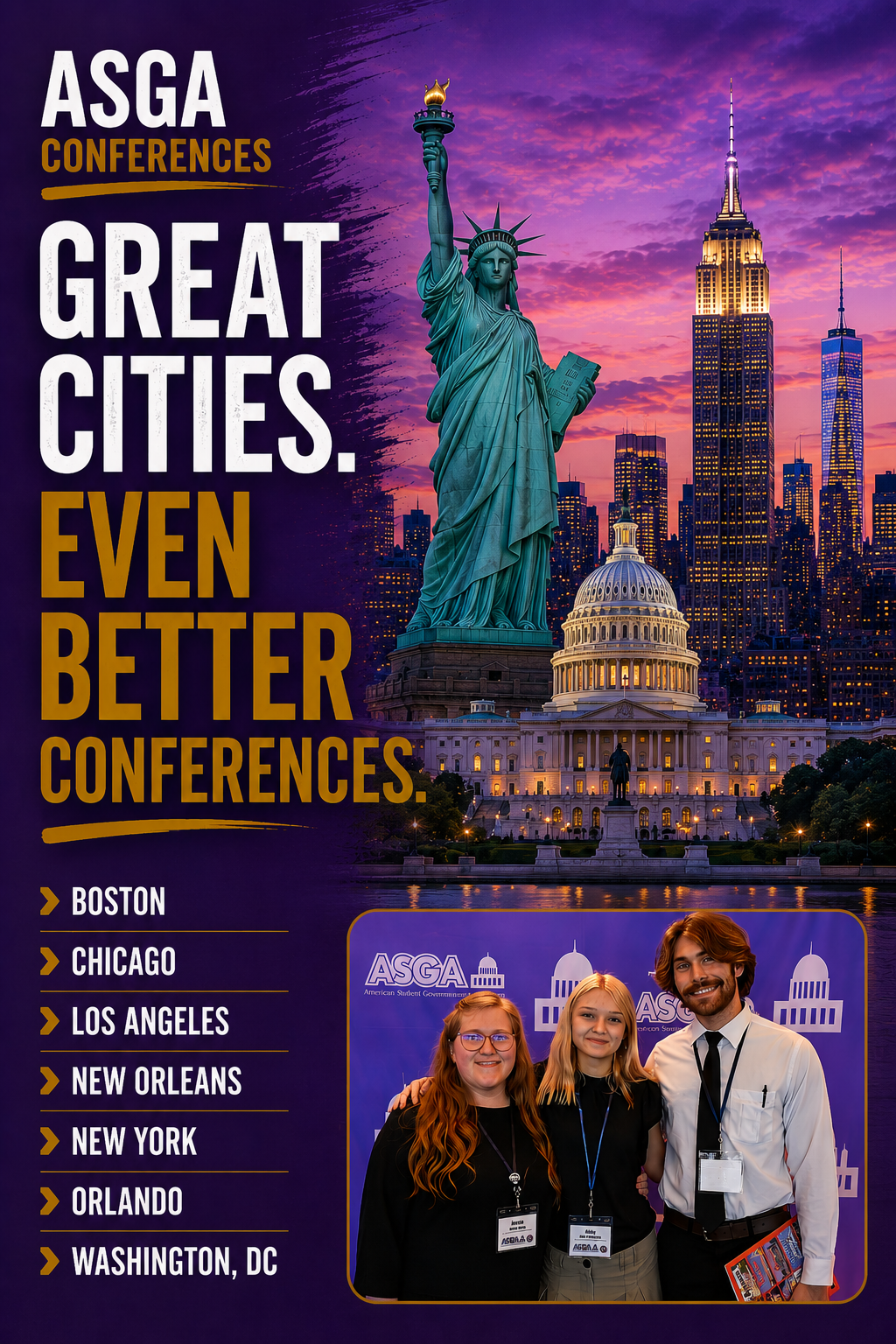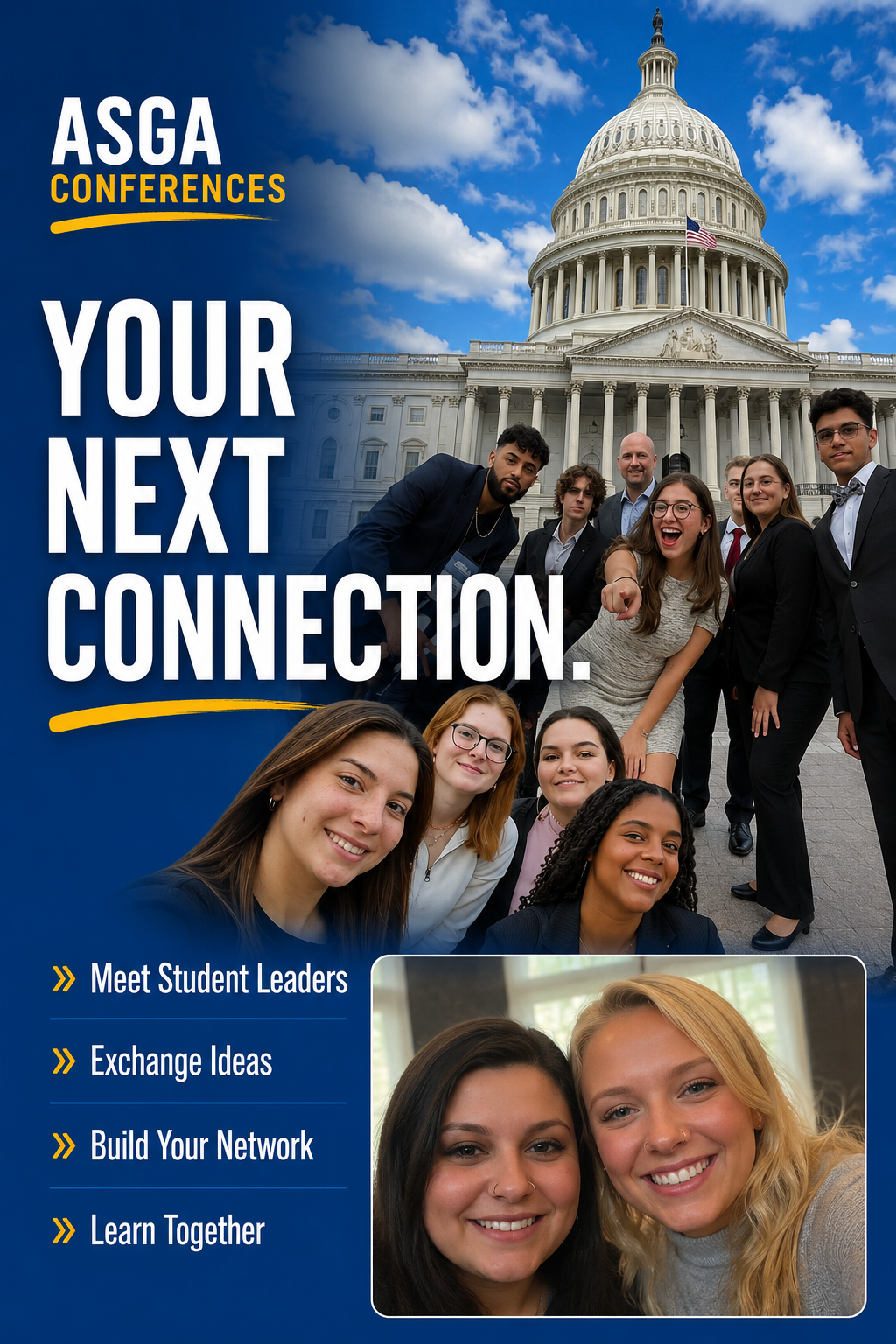
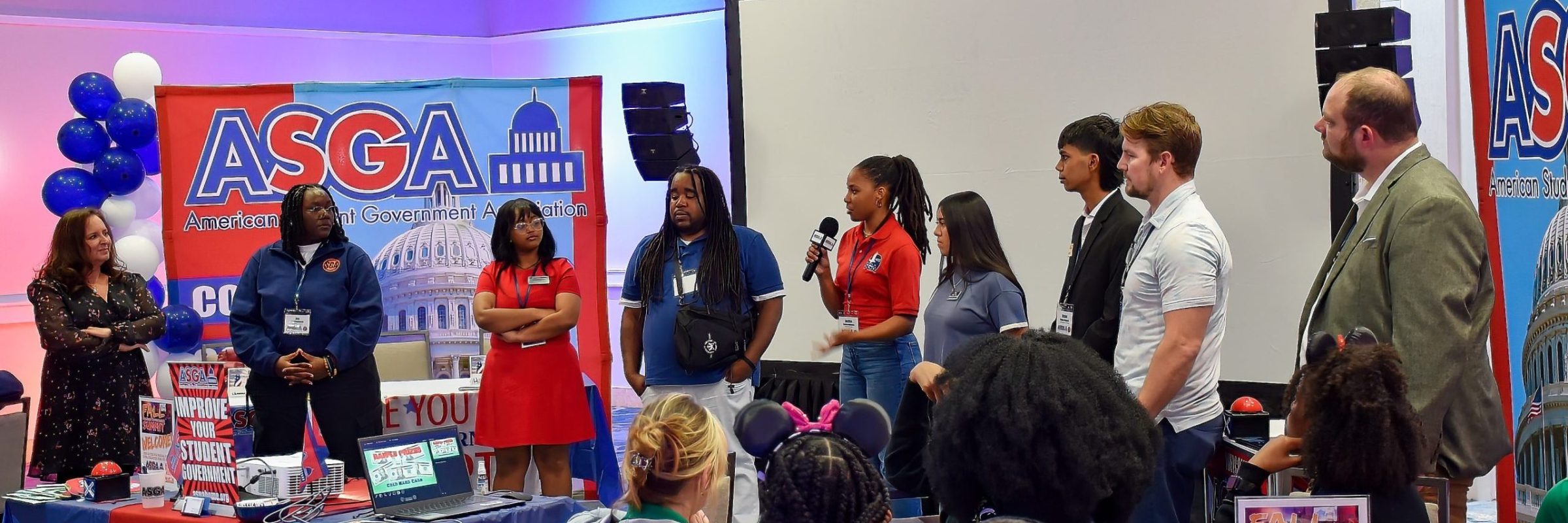
The Chicago Student Government Training Conference is a weekend event featuring 16 workshop sessions, 4 roundtable caucuses, and hours of practical help, research, and advice on how to improve your Student Government and become more effective & influential on your campus.
📍 Conference Location
The conference is being hosted at North Park University, 3225 West Foster Avenue, Hamming Hall, Chicago, IL 60625.
All visitors should park in designated visitor parking spots located at the Foster & Kedzie Parking Lot, 5141 N. Kedzie. Parking is free on the North Park campus.
📅 2026 Conference Schedule
Workshop descriptions below are based on the 2025 program and may be updated closer to the conference.
▶ Friday, October 23, 2026
▶ Saturday, October 24, 2026 — Main Conference Day
8:00 a.m. to 9:00 a.m. – Conference Registration & Continental Breakfast
- Hamming Hall
9:00 a.m. to 9:20 a.m. – Welcome
- Rasheed Ali Cromwell, Esq., Emcee
- SGA President, North Park University
Hamming Hall
9:20 a.m. to 9:30 a.m. – Networking Break
9:30 a.m. to 10:45 a.m. – Training Block 1
A Your SGA Report Card: 13 Steps to Raise Your Grade to A+ – Butch Oxendine · Hamming Hall
Are you one of the best SGs in America? Before you start boasting, keep in mind that even the finest SGs in the country have lots of room for improvement. And just because you control millions in student fees, get quoted on the front page of the campus paper, or are a minor celebrity in your own mind doesn’t mean that you’re truly appreciated, respected, and actually get things done for those you mean to serve: your fellow students. The nation’s “Super SGs” have some key characteristics in common. This is your chance to finally find out how yours stacks up against the best.
Delivery Format: It is presented in a lecture format. The presenter encourages feedback.
Presentation Resources: The session utilizes PowerPoint, as well as printed handouts.
Level of Interactivity (1–5, 5 being very interactive): 3
Learning Outcomes. After attending this session, participants should be able to:
- Understand the 13 key components that make up great SGs
- Know what to do first to improve
- Understand your SG’s current strengths and weaknesses
B Cleaning Up the Dirty Fighting In Your SGA – Michael D. Anthony, Ph.D. · Carl 301
Conflict is normal right? So why do we have so much trouble managing it when it comes up? It’s because we are sooooo dirty (when we communicate)! But it doesn’t have to be that way. This workshop will help you learn to fight it with good ol’ assertive communication. You think you know what that is, but you have no idea! Participants will have an opportunity to put their new skills to practice during the session.
Delivery Format: PowerPoints are used as a background visual to highlight major points, ideas, and strategies. The presentation is highly dialogued and participation based, where participants are asked from the moment they enter to engage in simulations and role-play.
Presentation Resources: This session utilizes PowerPoint/Keynote and printed handouts.
Level of Interactivity (1–5, 5 being very interactive): 5
Learning Outcomes. After attending this session, participants should be able to:
- Identify the most common dirty fighting techniques used in personal and organizational communication and how to avoid them
- Define four different types of communication and when to use each one
- Apply assertive communication techniques through discussion and role playing
C Movement Making: Mental Health and Students’ Rights Advocacy – Kat Klawes · Carl 113
83 percent of college students experience a mental health crisis while in college. There are few issues that are of life or death importance on college campuses and mental health supports and policies are one of them. Learn how to evaluate your campus mental health supports and policies. Using interactive activities, students will learn how to effectively advocate for better policies.
Presentation Resources: Assessment guide, Prezi, and handouts.
Level of Interactivity (1–5, 5 being very interactive): 4
Learning Outcomes. After attending this session, participants should be able to:
- Assess the mental health policies and supports on campus
- Determine which mental health supports or policies can be improved and how to advocate for change effectively
- Know how to implement better mental health policies and create a more inclusive community on their campus
D NEW Doing the Most: Talented and Overextended (Part 1) – Rasheed Ali Cromwell, Esq. · Carl 303
Stressed out? Too tired to make it to that next meeting? Same small group of people doing all the work? This powerful session is for you! It’s time for you to break this vicious cycle with the cure for the curse! This high energy exchange is a unique blend of energy and time management, personal and professional prioritizing, and leadership delegation/training best methods/strategies. Minimize obligations, maximize performance, transform leadership!
Delivery Format: This presentation is divided into two components. Part I is very interactive and engaging. It includes icebreakers, group breakouts/discussions and individual self-reflective assessments/processing. Questions/answers are inter-dispersed through the session for constant flow between the presenter and audience. Part II is centered more around group breakouts so participants can share best practices/strategies from their respective institutions to achieve session goals.
Presentation Resources: A combination of multimedia presentations handouts, and group breakouts.
Level of Interactivity (1–5, 5 being very interactive): 4
Learning Outcomes. After attending this session, participants should be able to:
- Reduce their daily workload by cutting back and increase their performance by working smarter
- Decrease student apathy by targeting different sections of the student body to increase overall participation in leadership
- Manage their expectations with a better understanding of time, priorities, and consistently reevaluating their involvement
10:45 a.m. to 11:00 a.m. – Networking Break
11:00 a.m. to 12:00 p.m. – Training Block 2
E The 25 Worst Mistakes Your Student Government Can Make (And How to Fix Them) – Butch Oxendine · Hamming Hall
Many SGs make the same mistakes over and over, never learning from the past. In this workshop, you’ll discover the most common SG mis-steps, and most importantly, how to avoid these pitfalls during your term of office.
Delivery Format: It is presented in a lecture format. The presenter encourages feedback through direct questions. The presenter uses volunteers to illustrate key points.
Presentation Resources: The session utilizes PowerPoint, as well as printed handouts.
Level of Interactivity (1–5, 5 being very interactive): 4
Learning Outcomes. After attending this session, participants should be able to:
- Understand the importance of learning from the mistakes of others
- Brainstorm your own list of mistakes to avoid at your institution
F D.E.L.E.G.A.T.E.—Just Do It! – Michael D. Anthony, Ph.D. · Carl 301
Delegation is a process and an art form. If you are going to get anything done this year, you have to do this better! Bring your fears of doing it all yourself and leave with a renewed sense of your ability to just let go!
Delivery Format: PowerPoints are used as a background visual to highlight major points, ideas, and strategies. The presentation is lecture/dialogue based, and utilizes a case study analysis by table participants to understand the content. Role-play is used to practice what has been learned.
Presentation Resources: This session utilizes PowerPoint/Keynote, case study, and printed handouts.
Level of Interactivity (1–5, 5 being very interactive): 4
Learning Outcomes. After attending this session, participants should be able to:
- Describe the process of delegation
- Develop strategies to improve delegation skills
- Practice the language and art of delegation
G Money Matters: Managing Budgets and Funding Student Activities – Kat Klawes · Carl 113
Student government treasurers and finance leaders play a crucial role in enabling student activities, events, and initiatives. Effectively managing and allocating funds requires strategic planning, clear processes, and transparency. Join this session, led by a Certified Nonprofit Accounting Professional (CNAP), former Student Government President, and higher education consultant, to master essential financial leadership skills. Learn how to create and manage clear budgets, responsibly allocate resources, secure additional funding, and communicate financial decisions transparently to the student body and campus community.
Presentation Resources: Interactive budgeting exercises, scenario-based simulations, and group discussions.
Level of Interactivity (1–5, 5 being very interactive): 4
Learning Outcomes. After attending this session, participants should be able to:
- Develop and maintain transparent, sustainable budgets for Student Government
- Create effective and equitable funding allocation processes
- Identify and pursue additional funding opportunities, including fundraising strategies
- Clearly and effectively communicate financial decisions and updates to students and campus stakeholders
- Evaluate financial activities to align spending with the organization’s mission and goals
H NEW Doing the Most: Talented and Overextended (Part 2) – Rasheed Ali Cromwell, Esq. · Carl 303
Stressed out? Too tired to make it to that next meeting? Same small group of people doing all the work? This powerful session is for you! It’s time for you to break this vicious cycle with the cure for the curse! This high energy exchange is a unique blend of energy and time management, personal and professional prioritizing, and leadership delegation/training best methods/strategies. Minimize obligations, maximize performance, transform leadership!
Delivery Format: This presentation is divided into two components. Part II is centered more around group breakouts so participants can share best practices/strategies from their respective institutions to achieve session goals.
Presentation Resources: A combination of multimedia presentations handouts, and group breakouts.
Level of Interactivity (1–5, 5 being very interactive): 4
Learning Outcomes. After attending this session, participants should be able to:
- Reduce their daily workload by cutting back and increase their performance by working smarter
- Decrease student apathy by targeting different sections of the student body to increase overall participation in leadership
- Manage their expectations with a better understanding of time, priorities, and consistently reevaluating their involvement
12:00 p.m. to 12:45 p.m. – Lunch
Hamming Hall
12:45 p.m. to 1:00 p.m. – ASGA Halftime
Hamming Hall
1:00 p.m. to 2:00 p.m. – Training Block 3
I How to Make Students Care About Your Student Government – Butch Oxendine · Hamming Hall
Your SG must do something real that matters to fellow students if you ever want to be respected and appreciated. This workshop will give real examples of innovative and exciting “signature programs” that are being used by SGs nationwide to get the attention of students and administrators. These programs will make your SG much-admired and “relevant,” and will help you with everything from member recruiting to voter turnout to relations with administrators.
Delivery Format: It is presented in a lecture format. The presenter welcomes feedback through direct questions. The presenter calls on volunteers to help illustrate key points.
Presentation Resources: The session utilizes PowerPoint, as well as printed handouts.
Level of Interactivity (1–5, 5 being very interactive): 4
Learning Outcomes. After attending this session, participants should be able to:
- Be aware of the 800 programs you could bring to your campus
- Understand what makes a “signature program” and how do you find one that will work for you
- Understand which signature programs are best
J Managing Multiple Priorities: Important vs. Urgent – Michael D. Anthony, Ph.D. · Carl 301
Time management is for the birds! Who wants to just manage time? You need to get smarter about managing your priorities. Based on the work of Dr. Steven Covey (author of “The 7 Habits of Highly Effective People”), this workshop will teach you how to put “first things first.” You only have a short time in office, come learn how to manage those “urgent” priorities with the “important” ones, and you’ll have more impact than you can ever imagine.
Delivery Format: PowerPoints are used as a background visual to highlight major points, ideas, and strategies. Mini-assessments are used to help participants understand how they currently use their time, and be able to walk away with a tool to maximize their time.
Presentation Resources: This session utilizes PowerPoint/Keynote, assessments, and printed handouts.
Level of Interactivity (1–5, 5 being very interactive): 4
Learning Outcomes. After attending this session, participants should be able to:
- Differentiate between important and urgent priorities in your life
- Identify your top time wasters and outline methods for dealing with them
- Understand how personal values/perceptions impact the way you establish priorities and manage your time
K SG 101: Getting Student Feedback, How & Why – Kat Klawes · Carl 113
Student Government’s job is to represent students on their campus. A crucial part of representing students is to know student opinions. Hear from a former SG President and professional advocate on how to solicit feedback and involvement from the student body. Learn how to effectively collect student feedback, about assessing student feedback, and how to create systems that help engage students within student government.
Learning Outcomes. After attending this session, participants should be able to:
- Understand how to use student feedback effectively
- Assess the student feedback collection methods for their SG
- Know how to utilize tools to better collect student feedback
- Learn how to actively engage students on their campus
L NEW Lost in Translation: Communication, Non-Communication and Everything in Between – Rasheed Ali Cromwell, Esq. · Carl 303
Instagram, twitter and text messaging. Social media and smartphones now provide instantaneous communication. Unfortunately, more often than not, expeditious delivery does not translate into quality content. The result: our communication is often diluted, ineffective and many messages get lost in translation. This interactive session revolves around what you’re saying, how you’re saying it and empowers participants to leverage that into transformative communication.
Delivery Format: This presentation includes a general session interactive exercise, group processing, and individual interactive activities. Questions/answers are inter-dispersed through the session for constant flow between the presenter and audience.
Presentation Resources: A combination of multimedia presentations, handouts, and a general group activity.
Level of Interactivity (1–5, 5 being very interactive): 4
Learning Outcomes. After attending this session, participants should be able to:
- Clearly articulate and advocate utilizing the proper form of communication
- Identify the three ways people process information and customize their communication accordingly
- Learn best methods and strategies to better understand what others are communicating to them by observing
body language, being more attentive listeners and assessing overall context of the communication
2:00 p.m. to 2:15 p.m. – Networking Break
2:15 p.m. to 3:15 p.m. – Roundtables
1. BONUS SESSION How & Why You Must Improve Your SG’s Web & Social Media Presence – Butch Oxendine · Hamming Hall
The times we live in have exposed a major weakness for most student governments: our web sites are outdated, inaccurate, and just plain bad. Also, our social networks are drastically underutilized. This workshop will provide tangible instructions on how to improve our entire web presence.
Presentation Resources: This session utilizes the internet.
Level of Interactivity (1–5, 5 being very interactive): 2
Learning Outcomes. After attending this session, participants should be able to:
- Understand what should be included at our SG web site
- Learn how to utilize social media to engage our student body
- Recognize the importance of focusing on web/social media
3:15 p.m. to 3:30 p.m. – Networking Break
3:30 p.m. to 4:30 p.m. – Training Block 4
M What Are Your Superpowers? What Your SGA Can (And Can’t) Do – Butch Oxendine · Hamming Hall
We all like to think our SG can change the world, but the reality is more brutal. Even the greatest SGs in America are limited in their authority, “power,” and influence. Can you really stop tuition increases, get more financial aid from the federal government, and build a new parking garage? This brutally frank session tells the truth about which projects, issues, and programs you can take on successfully—and which ones are doomed to fail.
Delivery Format: It is presented in a lecture format. Half of the workshop is an interactive exercise that includes all participants working in small groups. The presenter welcomes feedback through direct questions.
Presentation Resources: This session utilizes PowerPoint/Keynote and printed handouts.
Level of Interactivity (1–5, 5 being very interactive): 4
Learning Outcomes. After attending this session, participants should be able to:
- Understand which issues are impossible, possible, and probable to make a difference
- Understand how to prioritize your work on issues that are realistic
- Determine how much time to spend on lobbying
N Effective Student Legislators: You Won the Senate Seat…Now What? – Michael D. Anthony, Ph.D. · Carl 301
Student legislators can have a lot of authority over finances, decisions, space, and much more. You’ve been entrusted to do what’s right, but you might not know how, or even what you could be doing. New and veteran legislators come to this session and explore the who, what, why, and how of being a good student legislator.
Delivery Format: The presentation is lecture/dialogue based, and the presenter engages participants in mini brainstorming and strategy sessions throughout the presentation to maximize the information being shared in the room. Suggestions, tools, and strategies are written on a flipchart as participants share best practices.
Presentation Resources: This session utilizes PowerPoint/Keynote and printed handouts.
Level of Interactivity (1–5, 5 being very interactive): 3
Learning Outcomes. After attending this session, participants should be able to:
- Discuss ethics and integrity as they relate to holding a legislative position
- Identify strategies for being an effective representative
- Learn to develop effective legislation and how to engage constituents
O Spark Sessions: Innovation Lab – Kat Klawes · Carl 113
Welcome to Spark Sessions, where ideas ignite and action takes center stage. In these interactive, hands-on innovation labs, student leaders collaborate in real time to transform inspiring concepts into impactful campus initiatives. Guided by a seasoned student leader and policy consultant, participants engage in rapid brainstorming, structured ideation, and practical planning exercises. This session emphasizes creativity, collaboration, and strategic thinking, ensuring every participant leaves with a clear, actionable plan for immediate implementation.
Presentation Resources: Interactive group brainstorming, guided planning templates, and facilitator-led rapid brainstorming activities.
Level of Interactivity (1–5, 5 being very interactive): 5
Learning Outcomes. After attending this session, participants should be able to:
- Rapidly generate and refine innovative ideas for campus initiatives
- Master structured techniques for assessing idea feasibility and potential impact
- Enhance collaborative skills by working dynamically with peer leaders
- Identify common roadblocks and develop preemptive solutions
P NEW Impeachment: The Last Frontier – Rasheed Ali Cromwell, Esq. · Carl 303
“You’re fired.” In SGA, unfortunately, “getting rid” of someone from their position is not quite that simple. While many involved in an impeachment process understand their end goal — removal — they are often unclear on how to get there. This engaging session empowers participants with the tools to better understand the impeachment process, when and why to utilize it and the level of threshold to invoke an indictment. By providing a historic federal governmental context and examining different impeachment hearings from SGA at various institutions across the country, participants will leave with a better understanding of the overall process.
Delivery Format: Video snippet of an actual collegiate SGA impeachment, and Q&A (talk show style) are interspersed throughout the session.
Presentation Resources: The session utilizes presentation software, and printed handouts..
Level of Interactivity (1–5, 5 being very interactive): 2
Learning Outcomes. After attending this session, participants should be able to:
- Know the difference between impeachment and removal
- Learn alternative strategies to remove SGA members without invoking the impeachment process
- Rewrite impeachment/removal process policies and procedures in their SGA
4:30 p.m. to 4:40 p.m. – Break
4:40 p.m. to 5:00 p.m. – Wrap-Up & Raffle
- Kat Klawes, Emcee
- “Attend. Learn. Implement. Improve. Repeat” – Butch Oxendine
- Completion of Training Certificates
- Ultimate Connectors Raffle (return your evaluation form to enter)
Hamming Hall
▶ Sunday, October 25, 2026 — ASGA Overtime
ASGA Overtime – Private Consulting Appointments at conference hotel
(Must be arranged in advance. Contact conferences@asgaonline.com to book a consulting appointment, or book when you register for the conference.)
📄 Conference Materials
📄 2025 Conference Program📄 2025 Workshop Guide📄 2025 Conference Handouts
2026 materials will be available shortly before the conference.

Why This Conference?
- Start the year with great training
- Create a success plan for your SG
- Meet Student Governments nationwide

Why the Windy City?
- Affordable hotel in a great location
- Free hot breakfast & lunch
- Explore Navy Pier, Millennium Park & more

Why ASGA?
- Dedicated exclusively to Student Government
- 50,000+ student leaders trained
- Nearly 1,000 member institutions